Phantom Blade Zero Combat Explained: Sha-Chi, Ghostep & Builds
What the August 17 State of Play showed about Phantom Blade Zero's combat — the weapon counts two official Sony pages disagree on, reforging, summons, and how Hellwalker changes enemy behaviour.
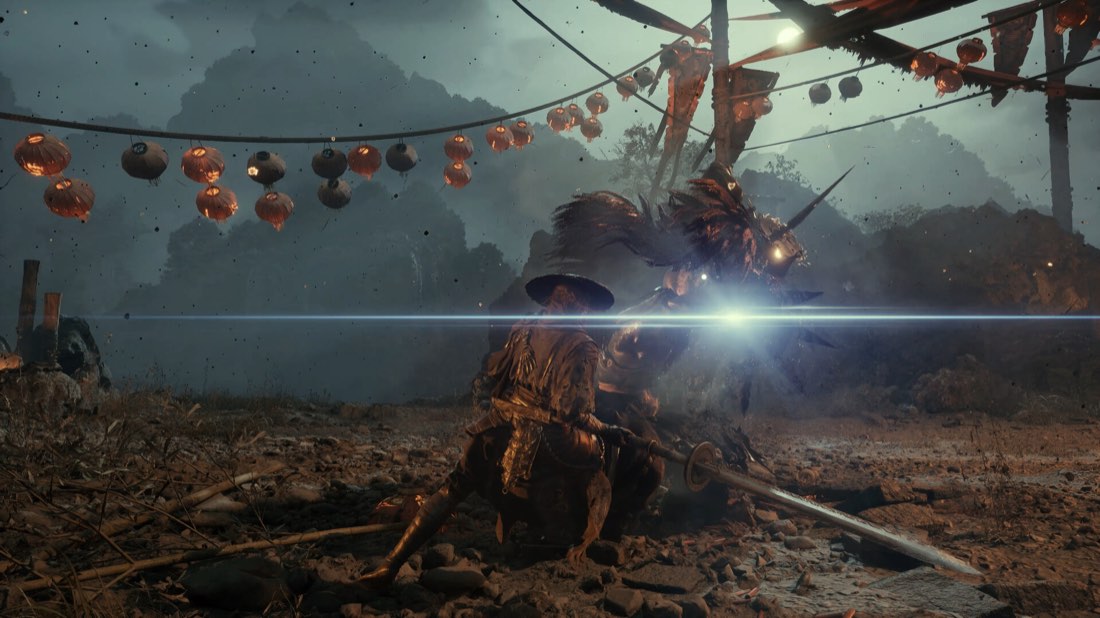
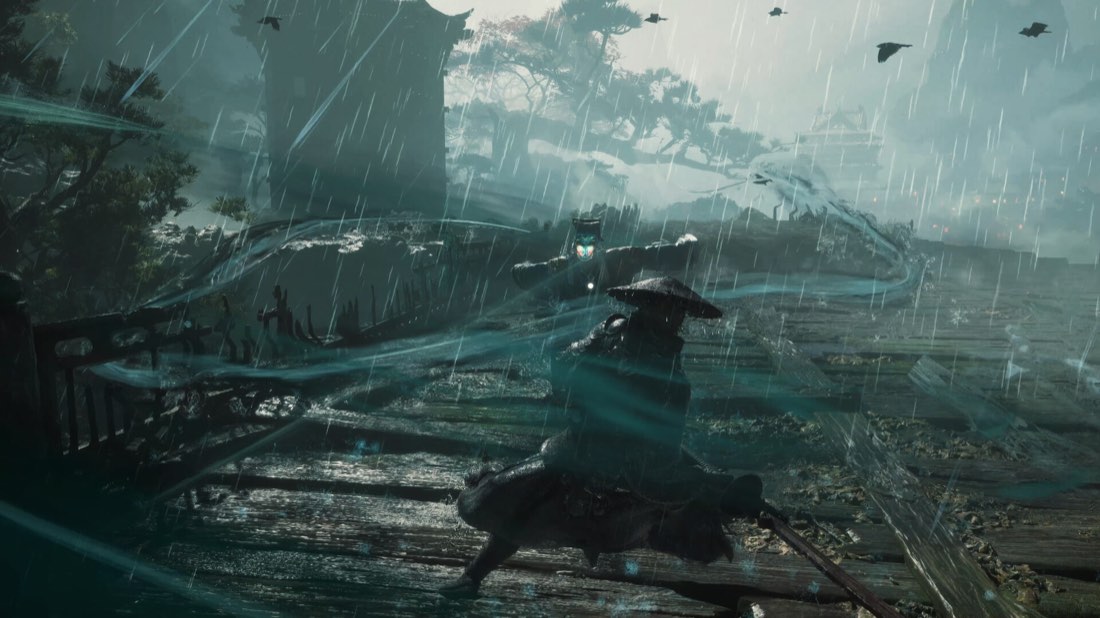
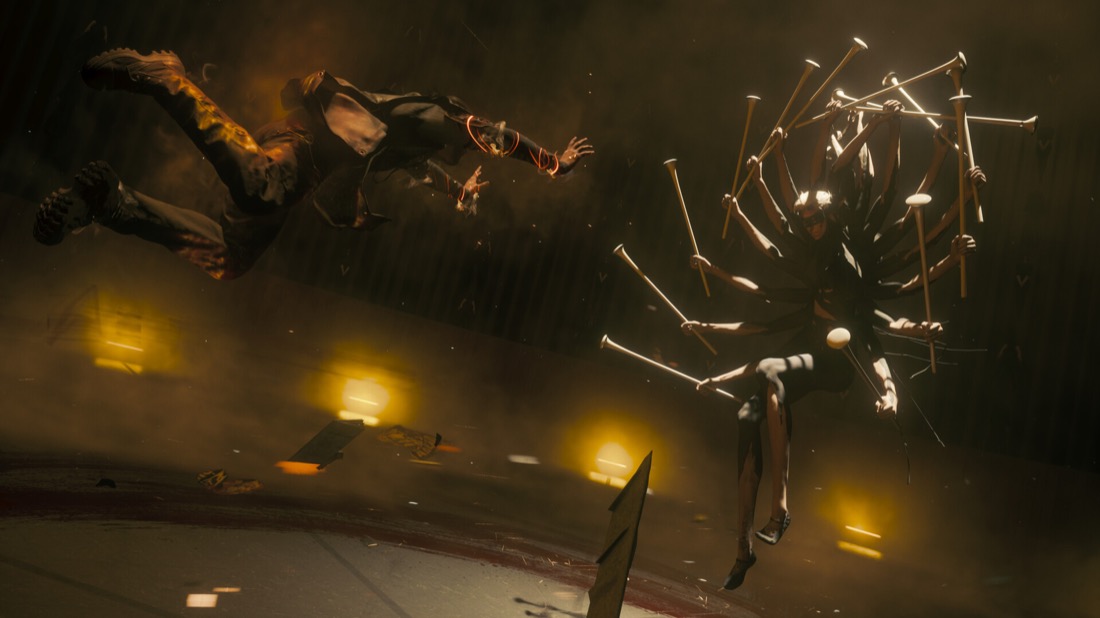
Phantom Blade Zero’s combat has one job: make wuxia cinema playable. The systems that deliver it are a stamina-like resource called Sha-Chi, two colour-coded classes of enemy attack that demand different answers, and a counter called Ghostep that rewards getting those answers exactly right.
The dedicated Phantom Blade Zero State of Play aired on August 17, 2026, and it was largely about this page’s subject — weapons, builds and difficulty. This guide has been rewritten around what the broadcast and Sony’s official recap actually said.
One sourcing note up front: the mechanic names used below — Sha-Chi, Ghostep, Brutal Move, Killer Move and Power Surge — come from hands-on previews (CGMagazine, TechRadar) and Wikipedia, not from Sony or S-GAME, and none of them appears in the August 17 recap.
Two warnings before the detail. The weapon counts are contested between two Sony-owned pages, and the “55 weapons” figure now circulating is outlet arithmetic rather than an announced number. And the difficulty modes do more than move sliders — but Sony put far less of that in writing than most recaps imply.
What the State of Play established
| Claim | Where it stands |
|---|---|
| More than 30 main weapons, plus 25 Phantom Edges | Official — but PlayStation.com says 20+ Phantom Edges |
| Weapon upgrading, accessory pairing, reforging to reclaim materials | Official |
| Ranged attacks and summons as build options | Official |
| Defeating some enemies expands your arsenal | Official |
| Three difficulty modes named: Wayfarer, Hellwalker, Sixty-Six Days | Official |
| A fourth mode called “Pathbreaker” | Press-reported only — in no Sony or S-GAME source |
| Sixty-Six Days as a 66-lives soft-permadeath run | Press-reported |
| A playable demo | Not mentioned at all — neither announced nor ruled out |
Sha-Chi: the resource everything runs on
Sha-Chi is the core combat currency. You build it by landing successful attacks, and you spend it on:
- Heavy attacks
- Blocking
- Power Surge — each blade carries one, functioning as an ultimate ability
Different weapon types channel Sha-Chi differently, so your build changes not just your damage but your economy. Because blocking costs Sha-Chi and attacking generates it, the system pushes you toward aggression rather than turtling — the defining difference from a stamina bar you spend on dodging.
Brutal Moves vs Killer Moves
The defensive game is built on two colour-flagged enemy attack classes, and confusing them is how you die:
| Attack class | Visual flag | Correct answer |
|---|---|---|
| Brutal Move | Blue glow | Can be blocked — but it drains Sha-Chi, so parry it instead |
| Killer Move | Red glow | Cannot be blocked or parried at all — dodge |
That distinction is the whole skill ceiling. Blocking a Brutal Move is survivable but bleeds your resource pool; parrying it avoids that drain and feeds the counter system below.
Ghostep: the payoff
Ghostep (also written “Ghost Step” in some previews) is the signature mechanic. Land either defensive answer perfectly:
- A perfect parry on a Brutal Move, or
- A perfect dodge on a Killer Move
…and Soul executes a repositioning manoeuvre — time slows and he flips behind the enemy for a heavy-damage opening, with combat momentum preserved.
This is the loop the whole game is built around: read the colour, pick the right defence, land it on frame, get rewarded with a cinematic counter.
The weapon count: two official sources, two different numbers
This is the part worth reading carefully, because most coverage has flattened it.
| Official source | Main / primary weapons | Phantom Edges |
|---|---|---|
| PlayStation Blog State of Play recap (Aug 17, 2026), bylined S-GAME founder and CEO Soulframe Liang | “more than 30 main weapons” | 25 |
| PlayStation.com product page | “30+ primary weapons” | 20+ |
| Steam store copy | “over 30 primary weapons” | more than 20 |
Two Sony-owned pages disagree with each other, and S-GAME’s own Steam copy matches the lower figure. The 30+/25 pairing is what the broadcast and its developer-written recap used; the storefront copy looks like the older marketing line, but neither Sony nor S-GAME has said so, and nobody has reconciled the two.
So do not treat “55 weapons” as a fact. It is arithmetic performed by outlets — Beebom, Shane the Gamer and wccftech printed 55, SavePoint printed 55+, Gamereactor printed 50+ — on top of a figure that is explicitly open-ended. Only the 25 is stated as an exact number; “more than 30” is a floor. The honest summary is at least 30 main weapons and either 20+ or 25 Phantom Edges, depending on which Sony page you read.
One more boundary: the counts describe the base game (“while exploring the Wulin”), not the separate Sixty-Six Days mode.
Which weapons were actually shown
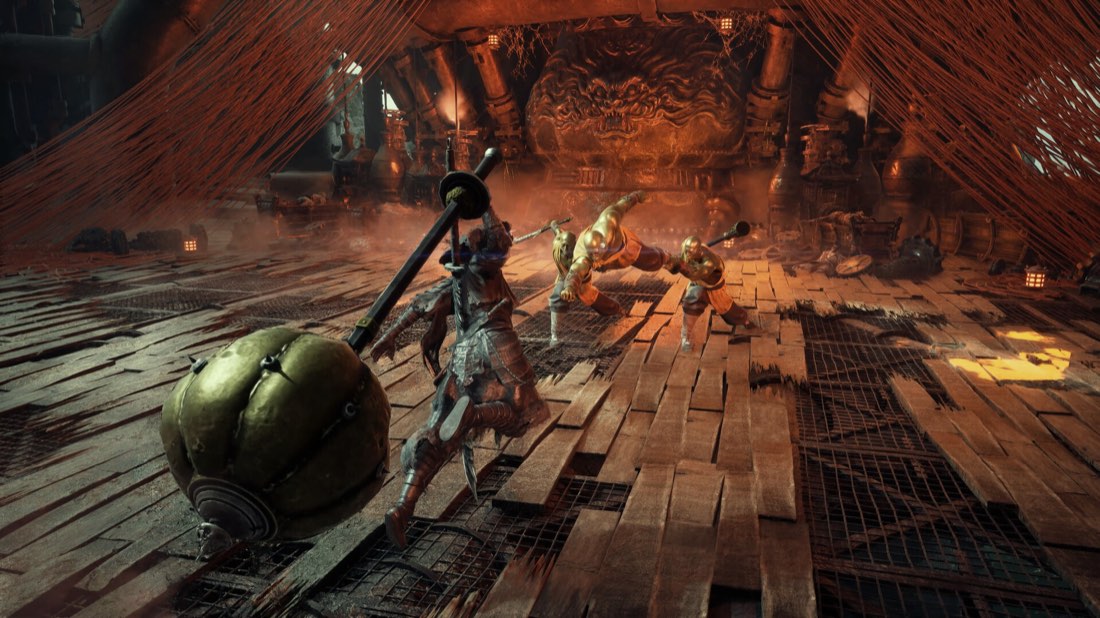
Outlets covering the broadcast named individual weapons, and this is press transcription rather than an official list. Noisy Pixel lists eight: the Drunken Sword, the White Serpent and Crimson Viper twin swords, a Soft Snake sword, iron fists, hammers, the Tiger Cannon and Flaming Mane. Playfront names a smaller subset of the same set.
The idea that Phantom Edges span cannons, lances, axes and hammers is likewise press-reported — it comes from outlets describing the footage, not from Sony’s recap, which lists no weapon categories at all.
From earlier hands-on builds, primary families included dual swords, katana, longsword and greatsword, with secondary equipment including throwing knives, chain sickles, cursed talismans and a bow.
Upgrading, accessories and reforging
This was the genuinely new build material, and the core of it is official. Per Sony’s recap, weapons can be upgraded and paired with different accessories “to create the build you want.”
Crucially, that investment is reversible. Sony’s post says that if you second-guess a weapon you’ve already upgraded, you can reforge it, get those materials back, and reinvest them in another weapon. That is a respec system in all but name, and it changes how freely you can experiment. Sony also states that defeating some enemies expands your arsenal, so acquisition is tied to combat rather than purely to exploration.
The finer mechanics are press-reported from the broadcast, not in the official post. Noisy Pixel and Playfront describe reforging as being performed with an item called the Reforging Talisman, and say it resets the weapon’s level; they also report that upgrading unlocks distinct weapon forms and techniques. Beebom and Khel Now add that each weapon has its own abilities and attack patterns and that you’re expected to swap against enemy types — hammers against shielded enemies, for example — and both mention a skill tree, which does not appear in Sony’s text.
Your loadout is two primaries plus two Phantom Edges, all swappable mid-fight. Director Soulframe Liang describes the complete build as:
“You can basically equip 2 main weapons and 2 secondary weapons. So, all these combinations of 4 weapons, along with 2 potions and 2 accessories, make a full build.”
He’s explicit that different bosses and elite enemies want different builds — this isn’t a game where one loadout carries you through.
Ranged attacks and summons
Sony’s recap frames combat as self-expression and names two options that had not been confirmed before: fighting at range, and summons that assist you in battle. The official wording offers to “take down enemies from afar” or “use summons to assist you in battle,” and says you’ve got plenty of options.
That is the whole of it. No summon roster, resource cost or cooldown system was detailed, in the recap or in the coverage of the presentation. Treat summons as confirmed to exist and undescribed beyond that.
Worth stating plainly, because the word invites confusion: Phantom Blade Zero is single-player. The PlayStation Store lists 1 player, and neither PlayStation Blog post mentions co-op or online play. Summons are an AI-ally mechanic, not an invasion or co-op hook.
On the ranged side, the PlayStation Store confirms DualSense vibration and trigger effects; a short S-GAME trailer covered by GamingBolt on August 18 described drawing a bow further increasing trigger resistance, plus combat haptics and 3D audio.
No levelling system — progression is per-weapon
There is no traditional level grind. Liang is blunt about it:
“We are not going to do a leveling system, like you hit level 100 for HP or level 100 for your attack… [we want] each step of progression to have meaning, to be more curated.”
Instead: each weapon and Phantom Edge has its own upgrade path, plus an evolution system that grants new skills and movements. Combined with reforging, that means your progression is portable between weapons rather than locked into a character sheet.
Difficulty: what Sony named, and what only outlets named
This is the second place where coverage and official sources part company.
| Mode | Status | What is actually confirmed |
|---|---|---|
| Wayfarer | Official | For players who “would simply like to enjoy the story” |
| Pathbreaker | Press-reported only | Named by Inven Global, GamingBolt, Noisy Pixel, Gamereactor and others as the tier between Wayfarer and Hellwalker. None of them describes what it does. It appears in no Sony or S-GAME source |
| Hellwalker | Official | You face “more advanced and adaptive enemy intelligence” — that phrase is the entire first-party description |
| Sixty-Six Days | Official (name only) | Sony says it “isn’t for the faint of heart” and nothing further |
Sony’s blog names three and never states a total, introducing them as its range of difficulty options — so it names three rather than asserting there are only three. The Japanese localisation of the same post names the same three. Gematsu, VGChartz, CGMagazine and SavePoint reproduce the three-name list; Inven Global, GamingBolt, Noisy Pixel, Gamereactor, Shane the Gamer and TechRadar report four and name Pathbreaker.
The likeliest reading is that Pathbreaker was visible on an on-screen difficulty menu without being explained — Noisy Pixel says it “is also shown, but not detailed.” There is one piece of mechanical corroboration beyond a bare list entry: Inven Global reports Sixty-Six Days unlocks after clearing the game on Pathbreaker or Hellwalker. Still, no official source confirms the name or the four-tier structure, so we won’t print it as fact.
A footnote on naming, since we ran it ourselves before the show: pre-broadcast reporting called the middle tier “Gamechanger.” Post-broadcast recaps call it “Pathbreaker.” Neither name has ever appeared in an official S-GAME or Sony source.
Hellwalker changes behaviour, not just numbers
The official promise is narrow and about enemies in general, not bosses specifically: more advanced and adaptive enemy intelligence.
Outlets covering the broadcast supply the mechanism, and this is the press-reported layer:
- Inven Global: bosses in Hellwalker “do not simply repeat fixed patterns; they react in real-time based on the player’s distance, missed attacks, and repetitive behaviors”
- Playfront: bosses dynamically react to your spacing and punish mistakes
- Push Square, attributing to S-GAME: the hardest difficulties feature enemy AI that reacts to your gameplay habits, forcing you to adapt mid-battle
- Noisy Pixel, in its own summary voice: Hellwalker incorporates core fighting game mechanics
No outlet had hands-on time with these modes, so the fixed-patterns contrast and the habit-reading specifics are elaboration on a broadcast, not verified behaviour.
This is consistent with what S-GAME had already said before the show. Game director Qiwei Liang described borrowing a concept from fighting games for boss AI: the boss analyses whether the situation favours him, with a “lucky draw” state where landing a hit continues a combo and missing prompts something else. At lower difficulties, the same boss runs predetermined sequences. Earlier reporting also had Hellwalker as a post-game unlock gated behind New Game+; Sony’s August 17 recap states no unlock condition for it either way.
Sixty-Six Days: lives, not a clock
Press recaps treat Sixty-Six Days as the most extreme option on the menu. Note the gap: Sony does not rank it as the hardest mode — the blog lists it alongside Hellwalker as an alternative way to raise the challenge and never spells out its rules.
What press coverage describes:
- The mode grants 66 lives, mirroring the story’s 66-day countdown
- Every defeat costs one day. When the counter hits zero, the run ends permanently
- Enemy strength and boss behaviour match Hellwalker (Inven Global, Noisy Pixel)
- It is unlocked after clearing the game on Pathbreaker or Hellwalker, per Inven Global; GamingBolt says it’s available after finishing on Pathbreaker while advising Hellwalker first; CGMagazine simply calls it unlockable
- GamingBolt adds, as its own observation, that this is gentler than conventional permadeath, because a single death doesn’t reset the run to the start
Do not confuse the mode with the premise. In the campaign, the 66 days is narrative framing — Soul takes a fatal wound and is left with 66 days to live. It is only in Sixty-Six Days mode that the countdown becomes an enforced rule, and it counts deaths, not elapsed time. One caveat in the interest of accuracy: no outlet affirmatively states the base campaign has no timer. None describes one, and the mode is presented as the place where the timer becomes mechanical — that is the basis for the mode-only reading.
Is it a soulslike?
The developers say no — they’ve publicly rejected both “soulslike” and “hack-and-slash” as labels. The design choices back that up:
- Selectable difficulty, now with named tiers, rather than one fixed challenge
- No levelling to grind past a wall, and reforging to undo build commitments
- Boss phase checkpoints — die in phase two and you respawn in phase two, not back at the start
That last one is a real quality-of-life departure from the genre it gets compared to. For how the difficulty tiers differ in practice, see our difficulty and length guide.
What the broadcast did not cover
A demo. The State of Play made no mention of a playable demo, and neither PlayStation Blog post references one. That matters because a PS5 demo listing briefly appeared on the PlayStation Store on August 11 before being pulled, which set the expectation.
Be precise about the status: this is silence, not a denial. Neither Sony nor S-GAME has said a demo is cancelled, delayed, or was never real. As of August 19, 2026 it has no release date and no official statement of any kind. Any article telling you the demo was killed is over-reading an absence.
Phantom Blade Zero launches October 29, 2026 on PS5 and PC via Steam and the Epic Games Store. Sony’s recap carries an asterisk — “October 28 in the US and select regions” — appended to a sentence scoped to PlayStation 5, so its application to the PC versions isn’t established there. S-GAME’s own site and the PlayStation Store both show a flat October 29.
Frequently asked questions
How many weapons are in Phantom Blade Zero?
Two official Sony sources disagree. The PlayStation Blog recap of the August 17 State of Play, written by S-GAME CEO Soulframe Liang, says more than 30 main weapons plus 25 Phantom Edges. PlayStation.com and Steam say 30+ primary and 20+ Phantom Edges. The '55 weapons' total circulating in coverage is outlet arithmetic on top of an open-ended figure, not an official count.
Is Phantom Blade Zero a soulslike?
The developers say no — they've described it as neither a soulslike nor a hack-and-slash. It has selectable difficulty, no traditional levelling system, and bosses that respawn you at the phase you died in rather than the start.
What is Sha-Chi in Phantom Blade Zero?
Sha-Chi is the core combat resource. You build it by landing attacks and spend it on heavy attacks, blocks, and Power Surge abilities. Different weapon types channel it differently.
What is Ghostep?
Ghostep is the signature counter. Parry a blue-flagged Brutal Move or dodge a red-flagged Killer Move at the critical moment and Soul repositions behind the enemy — slowing time and opening a heavy-damage window.
Can you undo a weapon upgrade in Phantom Blade Zero?
Yes. Sony's official State of Play recap says an upgraded weapon can be reforged to get the spent materials back and reinvest them in another weapon, so a build is not a one-way commitment.
What is Sixty-Six Days mode?
Sony names it as a difficulty option and says only that it 'isn't for the faint of heart.' Press recaps of the broadcast describe it as a soft-permadeath run with 66 lives, each defeat costing one day and the run ending permanently at zero. Those mechanics are press-reported, not official.