Phantom Blade Zero PC System Requirements
All four official PC tiers for Phantom Blade Zero — minimum, recommended, ray tracing and path tracing — plus DLSS 4, Denuvo, and the unanswered AMD upscaling question.
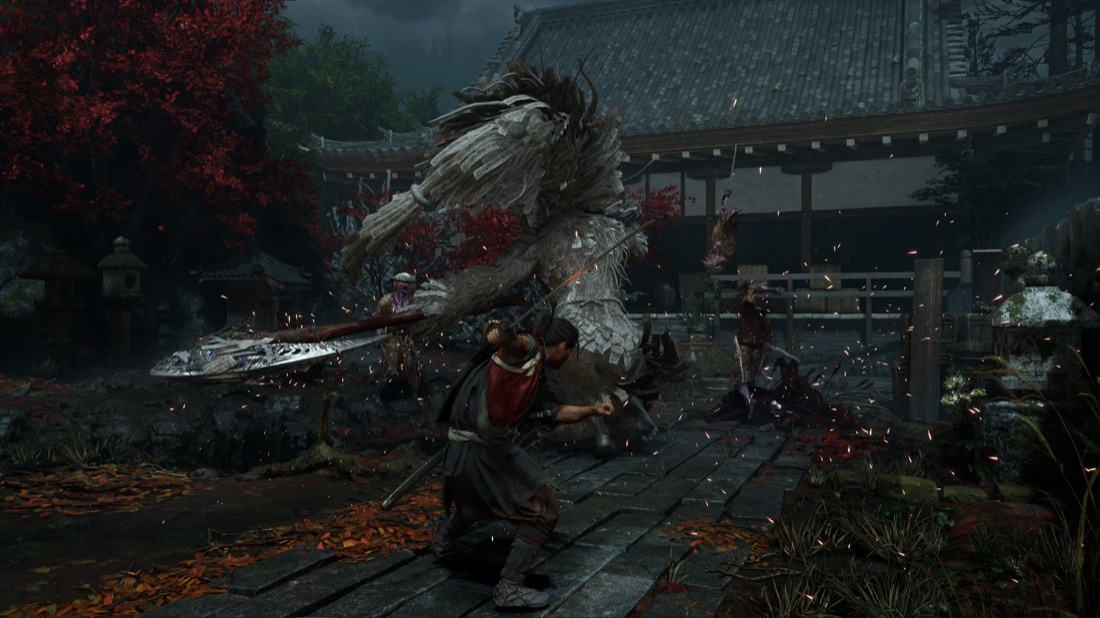
Phantom Blade Zero’s PC requirements are unusually transparent — S-GAME published four tiers, not the usual two, going all the way up to a path-tracing configuration. The entry bar is friendly (a GTX 1660 clears minimum), but there’s one caveat that runs through every tier: all four targets assume upscaling is on, and the only confirmed upscaler is NVIDIA’s.
Official requirements — all four tiers
| Tier | CPU | GPU | Target |
|---|---|---|---|
| Minimum | i7-8700K / Ryzen 5 3600 | GTX 1660 6GB / RX 5500 XT 8GB | 1080p / 30 FPS |
| Recommended | i5-10600K / Ryzen 5 5600X | RTX 3060 Ti 8GB / RX 6700 XT 12GB | 1440p / 60 FPS |
| Ray Tracing | — | RTX 5060 8GB | 1080p / 60 FPS |
| Path Tracing | — | RTX 5080 16GB | 2160p / 60 FPS |
Both base tiers need 16 GB RAM, DirectX 12, a 64-bit Windows 10/11, and — importantly — an SSD installation, which is mandatory rather than recommended.
Note that the ray tracing and path tracing tiers list NVIDIA GPUs only, with no AMD or Intel equivalents given, and they don’t restate CPU or RAM figures.
The upscaling caveat everyone should read
Every published target — all four of them — carries the phrase “with upscaling enabled.” None are native-resolution figures. A GTX 1660 hitting 1080p/30 means 1080p/30 with the render resolution dropped and upscaled back up.
This creates an open question S-GAME hasn’t answered: both base tiers list AMD GPUs (RX 5500 XT, RX 6700 XT), and both assume upscaling — but the only confirmed upscaler is DLSS, which is NVIDIA-only. FSR and XeSS support have not been announced. Which upscaler AMD owners are supposed to run is, as of mid-August 2026, unstated.
Ray tracing, path tracing and DLSS 4
NVIDIA confirmed at CES 2026 that the game ships with day-one DLSS 4 including Multi Frame Generation, plus PC-exclusive ray-traced reflections, shadows and caustics.
Two details worth flagging:
- Path tracing was a late reveal. It wasn’t in NVIDIA’s CES announcement — it only surfaced with the August 12 requirements post.
- Ray-traced global illumination is reported as not supported. Ray tracing here covers reflections, shadows and caustics, not RTGI.
There’s useful context in the delay, too: when S-GAME pushed the game from September 9 to October 29, director Soulframe Liang said part of the extra time went to “preserving as much of this visual impact as possible even without relying on ray tracing” — the team’s stated priority is that the game looks right on hardware that can’t do RT at all.
DRM: Denuvo confirmed
The Steam page carries the standard notice: “Incorporates 3rd-party DRM: Denuvo.” No activation limits, offline terms or removal plans have been announced.
Steam Deck: aspiration, not a promise
Director Liang has named Steam Deck as the team’s lowest-end optimisation target, while openly calling it “a hard task” they’re still working toward. His stated reasoning is worth quoting because it’s unusually candid about the market:
“This year the hardware price is going up, and people who want to replace their hardware may postpone their plan to upgrade their equipment, so we think we need to let the game be played by as many players as possible without reducing the quality.”
No Deck compatibility rating has been published — Valve typically doesn’t issue one before release.
Still unannounced
- Install size — no GB figure anywhere; only “SSD required”
- FSR / XeSS / NVIDIA Reflex — not announced
- Ultrawide (21:9, 32:9) and HDR on PC — not announced
- Frame-rate cap and graphics-menu contents — not announced
- Console modes — the only figures on record (2K/60 and 4K/30) come from a hedged 2023 developer statement and should be treated as three-year-old aspiration. PS5 Pro enhancements are confirmed to exist but entirely unspecified.
We’ll update this page as launch approaches — our release date guide tracks the rest of the pre-launch schedule.
Frequently asked questions
Can my PC run Phantom Blade Zero?
The minimum is an Intel i7-8700K or Ryzen 5 3600 with 16 GB RAM and a GTX 1660 6GB or RX 5500 XT 8GB, targeting 1080p/30 with upscaling. An SSD is mandatory, not optional.
Does Phantom Blade Zero support DLSS?
Yes — NVIDIA confirmed day-one DLSS 4 with Multi Frame Generation, plus PC-exclusive ray-traced reflections, shadows and caustics.
Does Phantom Blade Zero support FSR or XeSS?
Not announced. This is an open question, because every official performance tier assumes upscaling is enabled, yet the only confirmed upscaler is NVIDIA-only DLSS.
Does Phantom Blade Zero have path tracing?
Yes, on PC. S-GAME's official requirements list a path tracing tier needing an RTX 5080 16GB for 2160p/60 with upscaling.
Does Phantom Blade Zero use Denuvo?
Yes. The Steam store page carries the 'Incorporates 3rd-party DRM: Denuvo' notice.